Steel Grating: The Invisible Backbone of Industrial and Construction Projects
From factory platforms and municipal walkways to petrochemical facilities and parking structures, steel grating can be found in countless industrial and construction environments.
With its distinctive open-grid structure, steel grating may not always attract attention. Yet behind this simple appearance is an engineered structural system that combines strength, safety, drainage, ventilation, and material efficiency.
So, what makes steel grating such a widely used construction material?
Let’s take a closer look.
What Is Steel Grating?
Steel grating, also known as steel grid grating or metal grating, is an open structural panel manufactured by assembling bearing bars and cross bars at predetermined spacing.
Depending on the manufacturing method, the components can be joined through:
- Resistance welding
- Manual welding
- Pressure locking
- Other mechanical joining methods
The bearing bars provide the primary load-carrying function, while the cross bars connect and stabilize the structure.
The result is a strong yet relatively lightweight open-grid panel.
Unlike solid steel plates, the openings allow air, light, rainwater, and other materials to pass through, making steel grating particularly suitable for platforms, walkways, stairs, drainage covers, and other applications where ventilation and drainage are important.
Common Types of Steel Grating
Steel grating can be classified according to its manufacturing process, material, and application.
1. Welded Steel Grating
Welded steel grating is manufactured by joining bearing bars and cross bars through resistance welding.
It offers:
- High structural strength
- Consistent dimensions
- Excellent rigidity
- Efficient mass production
- Reliable connections
Welded grating is widely used for industrial platforms, walkways, stair treads, trench covers, and access structures.
It is one of the most common types of steel grating used in industrial projects.
2. Hand-Welded Steel Grating
For special dimensions, irregular shapes, or small-volume customized orders, hand-welded grating can provide greater manufacturing flexibility.
The components are individually positioned and welded according to the required drawings.
This type of grating is particularly useful for:
- Irregular platforms
- Special access structures
- Customized trench covers
- Non-standard dimensions
- Small-batch projects
When a standard panel cannot meet the project requirements, custom fabrication can provide a practical solution.
3. Press-Locked or Interlocked Grating
Press-locked grating is manufactured by inserting cross bars into pre-punched or pre-slotted bearing bars and mechanically locking the components together.
This creates a clean and uniform appearance.
It can be used in applications such as:
- Architectural projects
- Commercial buildings
- Decorative walkways
- Platforms
- Municipal landscaping
The choice between welded and press-locked grating should depend on the required load capacity, appearance, installation conditions, and project specifications.
4. Compound or Composite Grating
Composite steel grating combines a steel grating base with another surface layer, such as a checkered steel plate.
This design can provide a more solid walking surface while retaining some of the structural benefits of grating.
Depending on the configuration, composite grating may be used where additional:
- Anti-slip performance
- Surface coverage
- Protection against falling objects
- Walking comfort
is required.
Typical applications include industrial platforms, maintenance areas, stairways, and special working environments.
5. Stainless Steel Grating
For environments where corrosion resistance is a major concern, stainless steel grating can be manufactured using grades such as 304 or 316/316L.
Compared with conventional carbon steel, stainless steel provides superior resistance to corrosion and requires less surface protection.
Typical applications include:
- Food processing facilities
- Chemical plants
- Marine environments
- Pharmaceutical facilities
- Wastewater treatment plants
- Coastal infrastructure
The appropriate stainless steel grade should be selected according to the actual corrosive environment.
Why Choose Steel Grating?
Steel grating offers several advantages compared with conventional solid steel plates and other drainage or access products.
1. High Strength with Efficient Material Usage
The load-bearing bars are designed to carry the applied loads while the open spaces reduce unnecessary material.
This provides an excellent balance between:
Strength + Weight + Material Efficiency
For large platforms and walkways, reducing structural dead weight can also simplify transportation, handling, and installation.
2. Lightweight and Easy to Install
Because steel grating contains a large amount of open space, it can be considerably lighter than a solid steel plate designed for a comparable application.
This provides several practical benefits:
- Easier transportation
- Easier manual handling
- Faster installation
- Reduced supporting structure requirements
- Lower installation labor
For large industrial projects, these advantages can translate into significant construction efficiencies.
3. Excellent Drainage and Ventilation
One of the most distinctive advantages of steel grating is its open-grid structure.
Rainwater can pass directly through the openings rather than accumulating on the surface.
At the same time, the open structure allows:
- Natural ventilation
- Light transmission
- Heat dissipation
- Reduced water accumulation
- Reduced snow accumulation
This makes steel grating particularly suitable for outdoor platforms, industrial walkways, drainage systems, and elevated structures.
4. Slip-Resistant Surface Options
For areas exposed to water, oil, snow, or other contaminants, serrated steel grating can be used.
The serrated surface increases contact between footwear and the bearing bars, helping improve traction.
Serrated grating is commonly selected for:
- Industrial plants
- Outdoor stairs
- Oil and gas facilities
- Wastewater treatment plants
- Mining facilities
- Marine environments
The appropriate anti-slip design should be selected according to the actual working conditions and applicable safety requirements.
5. Easy Installation and Maintenance
Steel grating can be installed using different fixing methods depending on the application.
Welding
Welding provides a strong and relatively permanent connection.
It is commonly used for:
- Permanent platforms
- Industrial walkways
- Fixed stairways
- Heavy-duty structures
Grating Clips and Bolted Connections
Mechanical fixing allows panels to be removed more easily.
This is particularly useful when:
- Equipment underneath requires regular maintenance
- Grating panels need to be replaced
- Future modifications are expected
- Temporary structures are involved
6. Long Service Life with Proper Surface Treatment
For carbon steel grating used outdoors, hot-dip galvanizing is one of the most common corrosion protection methods.
The zinc coating helps protect the steel from:
- Moisture
- Rain
- Atmospheric corrosion
- Oxidation
For more demanding environments, stainless steel or specialized protective coatings may be considered.
The appropriate surface treatment should always be selected based on the actual environment and expected service life.
Where Is Steel Grating Used?
The versatility of steel grating makes it suitable for a wide range of industries.
Industrial Plants
Steel grating is widely used for:
- Equipment platforms
- Maintenance walkways
- Operating platforms
- Elevated access areas
- Stair treads
- Machine access structures
Its open structure allows workers to access equipment while providing ventilation and drainage.
Energy and Power Facilities
Steel grating is commonly found in:
- Power plants
- Substations
- Wind power facilities
- Solar power plants
- Cable trenches
- Equipment platforms
For electrical environments, material selection is particularly important. In areas requiring electrical insulation, FRP grating may be considered as an alternative to metal grating.
Oil and Petrochemical Facilities
Petrochemical facilities often require products capable of handling demanding environmental conditions.
Steel grating can be used for:
- Pipe racks
- Maintenance platforms
- Walkways
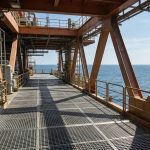
- Offshore structures
- Equipment access areas
For corrosive or marine environments, stainless steel or properly protected carbon steel may be selected depending on the project specifications.
Municipal and Transportation Infrastructure
Steel grating also plays an important role in urban infrastructure.
Typical applications include:
- Drainage trench covers
- Road drainage grates
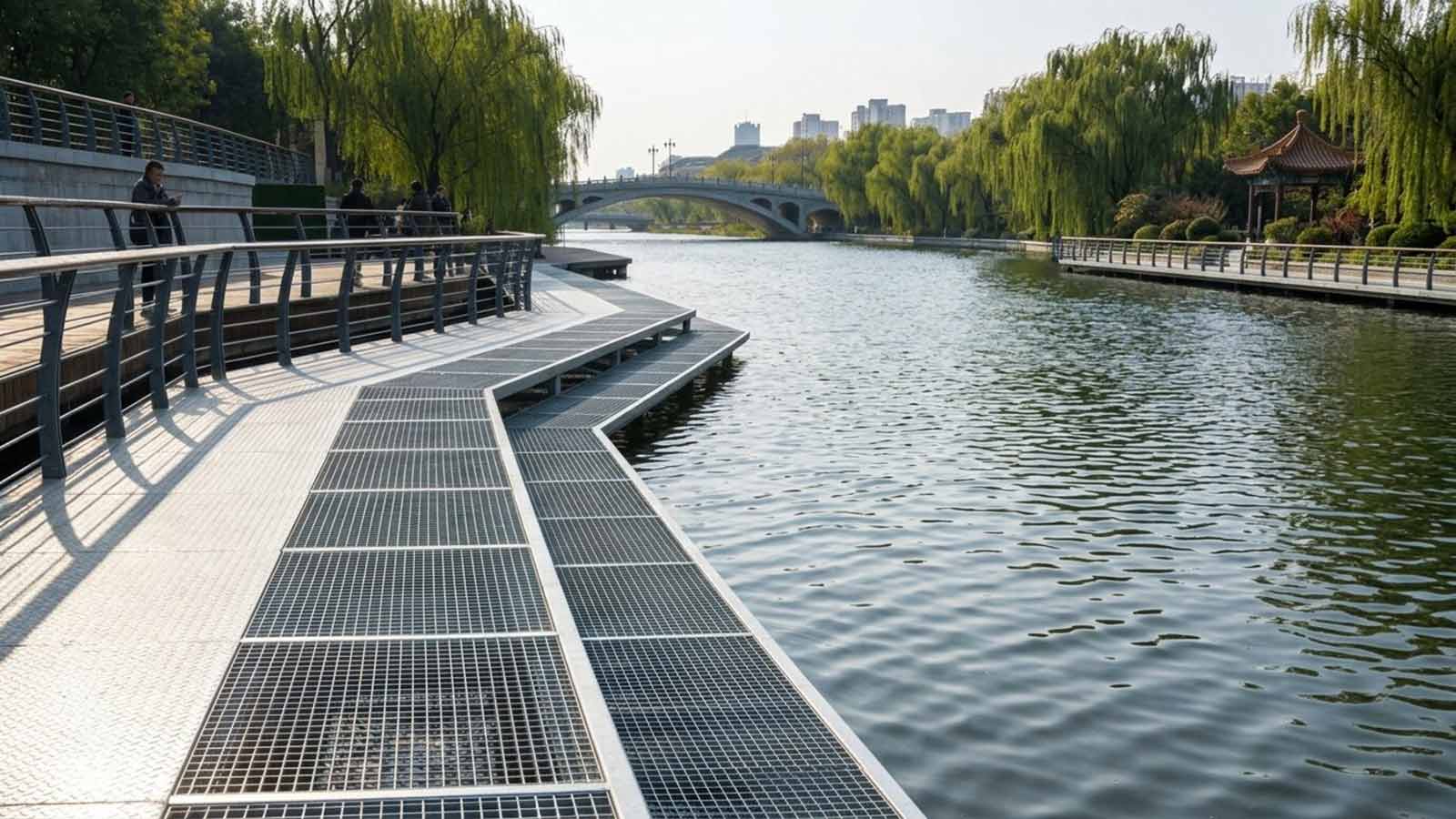
- Pedestrian walkways
- Bridge walkways
- Subway facilities
- Parking structures
Its open structure provides excellent drainage while maintaining sufficient load-bearing capacity when properly designed.
Commercial and Architectural Applications
Steel grating is not limited to industrial facilities.
Its clean geometric appearance has also made it increasingly popular in architectural applications, including:
- Commercial walkways
- Architectural platforms
- Ceiling structures
- Facade elements
- Landscape walkways
- Decorative structures
With appropriate finishing and design, steel grating can combine structural functionality with modern industrial aesthetics.
How to Choose the Right Steel Grating?
Selecting the right grating requires more than simply choosing a panel size.
Several important factors should be considered.
1. Load Capacity
First determine what the grating will be expected to support:
- Pedestrian traffic
- Equipment
- Materials
- Forklifts
- Vehicles
- Other dynamic loads
The bearing bar height, thickness, spacing, and support span should be selected based on the required load capacity.
For example, common bearing bar sizes may include:
32 × 5 mm
40 × 5 mm
However, the final specification should be determined through appropriate load calculations rather than relying on the bar size alone.
2. Surface Treatment
The environment determines the appropriate surface protection.
Dry Indoor Environment
Painted or untreated carbon steel may be suitable for some applications.
Outdoor Environment
Hot-dip galvanized steel grating is commonly selected for improved corrosion resistance.
Highly Corrosive Environment
Depending on the chemicals and exposure conditions, consider:
- 316/316L stainless steel
- Specialized coatings
- FRP grating
3. Anti-Slip Requirements
For dry indoor walkways, standard flat bearing bars may be sufficient.
For:
- Wet areas
- Oil-contaminated environments
- Outdoor stairs
- Marine facilities
Serrated bearing bars are often a better choice.
4. Installation Method
The fixing method should match the intended use.
Welding:
Suitable for permanent structures requiring strong, fixed connections.
Bolted or clipped connections:
Suitable when easy removal, maintenance, or replacement is important.
5. Applicable Standards
Steel grating should be manufactured and inspected according to the standards specified by the project.
Depending on the target market, different standards may apply.
For projects using Chinese standards, YB/T 4001.1 is an important reference for steel grating design and manufacturing.
For international projects, customers may specify standards such as EN, ASTM, ANSI, or other regional/project-specific requirements.
Therefore, the applicable standard should be confirmed before production.
The Future of Steel Grating: Lighter, Smarter and More Sustainable
As industrial construction moves toward greater efficiency and sustainability, steel grating is also evolving.
Green Manufacturing
Manufacturers are increasingly focusing on:
- Energy-efficient production
- Improved galvanizing processes
- Reduced material waste
- Recycling of steel products
Because steel is highly recyclable, steel grating can contribute to more sustainable construction practices.
High-Precision Customization
Modern manufacturing technologies such as:
- CNC cutting
- Automated welding
- Robotic production
- Digital design
allow manufacturers to produce more complex and precise grating components.
This makes customized grating easier to integrate into modern construction projects.
Optimized Structural Design
Engineering software and structural analysis can help optimize:
- Bearing bar dimensions
- Bar spacing
- Support spans
- Overall panel weight
The goal is to achieve the required performance while avoiding unnecessary material consumption.
More Specialized Materials
As application environments become more demanding, specialized materials are becoming increasingly important.
Depending on the project, solutions may include:
- Carbon steel
- Galvanized steel
- Stainless steel
- FRP grating
- Aluminum grating
- Composite grating
The future of grating is not simply about making products stronger—it is about choosing the right material and structure for each environment.
Conclusion
Although steel grating may appear to be a simple grid of steel bars, its engineering value lies in its carefully designed structure.
It combines:
High Strength + Lightweight Construction + Drainage + Ventilation + Safety + Easy Installation
From industrial platforms and petrochemical facilities to municipal drainage systems and modern architectural projects, steel grating continues to play an important role as a reliable structural and access solution.
The right steel grating is not necessarily the thickest or strongest product. It is the product designed for the right load, environment, material, surface treatment, and installation method.
If you are planning a steel grating project, providing the application, dimensions, support span, load requirements, material, and surface treatment will allow a manufacturer to recommend the most suitable solution.