Hot-Dip Galvanized Steel Grating vs. Cold Galvanized Steel Grating: What’s the Difference?
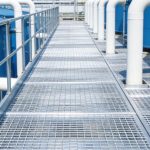
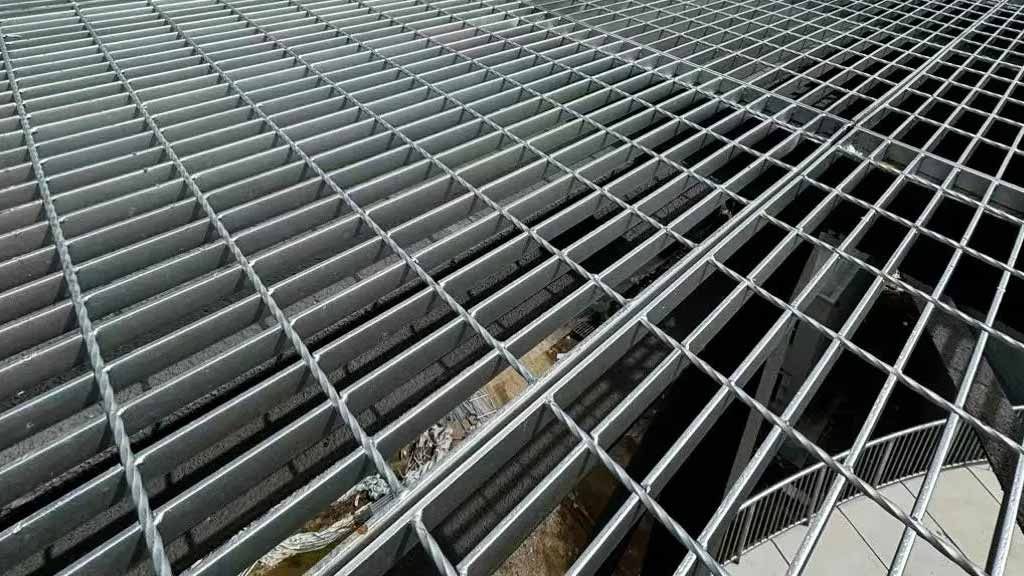
Galvanized steel grating is one of the most widely used types of grating for water treatment plants, wastewater treatment facilities, platforms, walkways, and industrial applications. Among the different galvanizing methods, hot-dip galvanized steel grating is by far the most common choice for outdoor and humid environments.
The main difference between hot-dip and cold galvanizing is the galvanizing process, zinc coating thickness, corrosion resistance, and expected service life.
What Is Hot-Dip Galvanized Steel Grating?
Hot-dip galvanizing is a process in which fabricated steel grating is immersed in a bath of molten zinc, typically at approximately 440–460°C (824–860°F).
Before galvanizing, the steel grating undergoes surface preparation and cleaning. When the grating is immersed in molten zinc, iron and zinc atoms react and diffuse into each other, creating a metallurgically bonded coating consisting of iron-zinc alloy layers and an outer layer of pure zinc.
Unlike paint or other surface coatings, hot-dip galvanizing forms a strong bond with the steel substrate, providing long-term protection against corrosion.
Structure of a Hot-Dip Galvanized Coating
A typical hot-dip galvanized coating consists of several layers. From the steel substrate outward, these layers generally include:
- Gamma (Γ) phase: An iron-zinc alloy layer formed directly on the steel substrate. It is relatively hard and provides a strong metallurgical bond.
- Delta (δ) phase: The main alloy layer, providing strong adhesion and corrosion protection.
- Zeta (ζ) phase: A columnar iron-zinc alloy layer with good mechanical properties.
- Eta (η) phase: The outer layer of relatively pure zinc, which provides additional corrosion protection through barrier protection and sacrificial action.
This multi-layer structure is one of the key reasons why hot-dip galvanized steel grating offers significantly better corrosion resistance than cold-galvanized products.
How Long Does Hot-Dip Galvanized Steel Grating Last?
The service life of galvanized steel grating depends on the environment, corrosion conditions, zinc coating thickness, exposure to moisture and chemicals, and maintenance.
As a general reference, hot-dip galvanized steel grating may provide the following approximate service life:
| Application Environment | Approximate Service Life |
|---|---|
| Rural / Low-Pollution Atmosphere | 20–35 years |
| Urban / Industrial Atmosphere | 15–25 years |
| Humid / Moderately Corrosive Water Treatment Environment | 8–15 years |
These figures are only general estimates. Actual service life can vary significantly depending on factors such as chloride concentration, chemical exposure, humidity, water quality, and maintenance conditions.
For areas exposed to particularly aggressive chemicals or continuous immersion, additional corrosion protection or a different material may be more appropriate.
Hot-Dip Galvanized vs. Cold-Galvanized Steel Grating
Cold galvanizing, commonly referring to electro-galvanizing, uses an electrical current to deposit a relatively thin layer of zinc onto the steel surface.
The main differences can be summarized as follows:
| Feature | Hot-Dip Galvanized | Cold Galvanized / Electro-Galvanized |
|---|---|---|
| Galvanizing Process | Immersion in molten zinc | Electrochemical zinc deposition |
| Typical Coating | Thicker | Relatively thin |
| Bond with Steel | Metallurgical bond | Electro-deposited coating |
| Corrosion Resistance | Excellent | Relatively limited |
| Outdoor Performance | Excellent | Limited |
| Humid Environment | Suitable | Less suitable |
| Water Treatment Plants | Recommended | Generally not recommended for exposed areas |
| Initial Appearance | Usually silver/gray | Often smoother and more uniform |
Cold-galvanized coatings are generally much thinner than hot-dip galvanized coatings. A coating in the range of 5–15 μm may be used for some electro-galvanized products, although actual specifications vary by product and standard.
Because of its thinner zinc layer, cold-galvanized steel grating generally provides much less long-term corrosion protection than hot-dip galvanized grating.
Which Galvanized Steel Grating Is Better for Water Treatment Plants?
For water treatment plants and wastewater treatment facilities, hot-dip galvanized steel grating is generally the preferred option, particularly for:
- Outdoor platforms
- Walkways and access platforms
- Maintenance platforms
- Stair treads
- Drainage areas
- Equipment platforms
- Areas with high humidity
- Structures exposed to rain and atmospheric moisture
Water treatment facilities often contain a combination of high humidity, condensation, chemicals, and corrosive gases. Therefore, choosing a grating with adequate corrosion protection is essential for long-term service.
Compared with cold-galvanized steel grating, hot-dip galvanized steel grating provides a thicker and more durable zinc coating, making it a more reliable choice for demanding industrial environments.
Conclusion
The key difference between hot-dip galvanized and cold-galvanized steel grating lies in their galvanizing process and level of corrosion protection.
Hot-dip galvanized steel grating offers a thicker, metallurgically bonded zinc coating and significantly better resistance to corrosion. It is therefore widely used for water treatment plants, wastewater facilities, industrial platforms, walkways, and outdoor structures.
Cold-galvanized steel grating may be suitable for less demanding indoor applications, but it is generally not the first choice for outdoor, humid, or moderately corrosive environments.
If you are selecting steel grating for a water treatment or industrial project, factors such as grating type, load requirements, span, surface treatment, material, and environmental conditions should all be considered before making a final selection.