Steel Grating: More Than an Industrial Material, but the Hidden Backbone of Infrastructure
From elevated platforms in industrial plants and stormwater drains on city streets to maintenance walkways in power stations and heavy-duty cargo areas at ports, there is one seemingly ordinary yet indispensable material found in countless applications: steel grating.
Made from steel and formed into an open grid structure, steel grating combines high strength, excellent load-bearing capacity, open-area performance, and corrosion resistance. It has become an essential infrastructure component across industries such as energy, chemical processing, municipal engineering, transportation, and construction.
From standardized production to fully customized solutions, steel grating has evolved far beyond basic load-bearing applications. Today, it provides not only structural support but also practical and aesthetic value for modern industrial and architectural projects.
Let’s take a closer look at the capabilities, applications, and selection considerations of this versatile material.
1. What Is Steel Grating? Key Features and Advantages
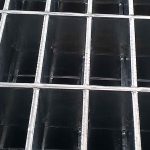
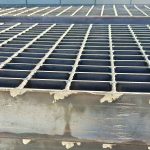
Steel grating, also known as steel bar grating, is an open-grid panel made by joining bearing bars and cross bars through processes such as pressure welding, pressure locking, or swage locking.
Common materials include Q235 and Q355 carbon steel, stainless steel, and aluminum alloy, allowing steel grating to be adapted to different load, environmental, and application requirements.
Its major advantages include:
High Load Capacity with a Lightweight Structure
Bearing bar sizes can range from approximately 20 × 3 mm to 75 × 6 mm, with cross bar spacing commonly available in 50 mm or 100 mm configurations.
Depending on the design and load requirements, steel grating can support loads of several hundred kilograms per square meter while remaining significantly lighter than traditional solid steel plates.
This combination of high strength and relatively low self-weight can help reduce structural loads and make transportation and installation easier.
High Open Area for Ventilation and Drainage
The open-grid structure of steel grating typically provides an open area of approximately 30%–70%, depending on the bar dimensions and spacing.
This allows air, light, water, and heat to pass through efficiently.
For example, steel grating used as cable trench covers in power plants can improve heat dissipation, while municipal drainage grates can help rainwater flow away quickly and reduce water accumulation.
Excellent Corrosion Resistance
Steel grating can be supplied with a variety of surface treatments, including hot-dip galvanizing, electro-galvanizing, painting, and powder coating. Stainless steel grating can also be used where higher corrosion resistance is required.
Hot-dip galvanized steel grating is particularly popular for outdoor and industrial applications because its zinc coating provides effective protection against moisture and corrosion.
With appropriate material selection and surface treatment, steel grating can perform reliably in demanding environments such as petrochemical facilities, coastal areas, wastewater treatment plants, and other corrosive applications.
Easy Installation and Customization
Steel grating panels can be manufactured in different dimensions and configurations to meet project requirements.
They can also be customized with cut-outs, notches, openings, edge bars, and special shapes. Installation can generally be completed using welding or bolted fixing methods.
This flexibility makes steel grating suitable for complex layouts, irregular structures, and projects requiring fast installation or replacement.
Low Maintenance and Long Service Life
Because of its open structure, steel grating is less likely to accumulate dirt, water, and debris than solid flooring materials.
Routine cleaning is generally sufficient for maintenance, while appropriate surface treatment can significantly extend service life.
Over the entire project lifecycle, steel grating can therefore provide a cost-effective alternative to heavier or more maintenance-intensive materials.
2. Applications of Steel Grating Across Different Industries
Steel grating is used in a wide variety of environments. Its combination of strength, ventilation, drainage, and durability makes it particularly suitable for industrial and infrastructure projects.
Industrial Applications
Power and Energy
Steel grating is widely used in:
- Power plant maintenance platforms
- Turbine maintenance walkways
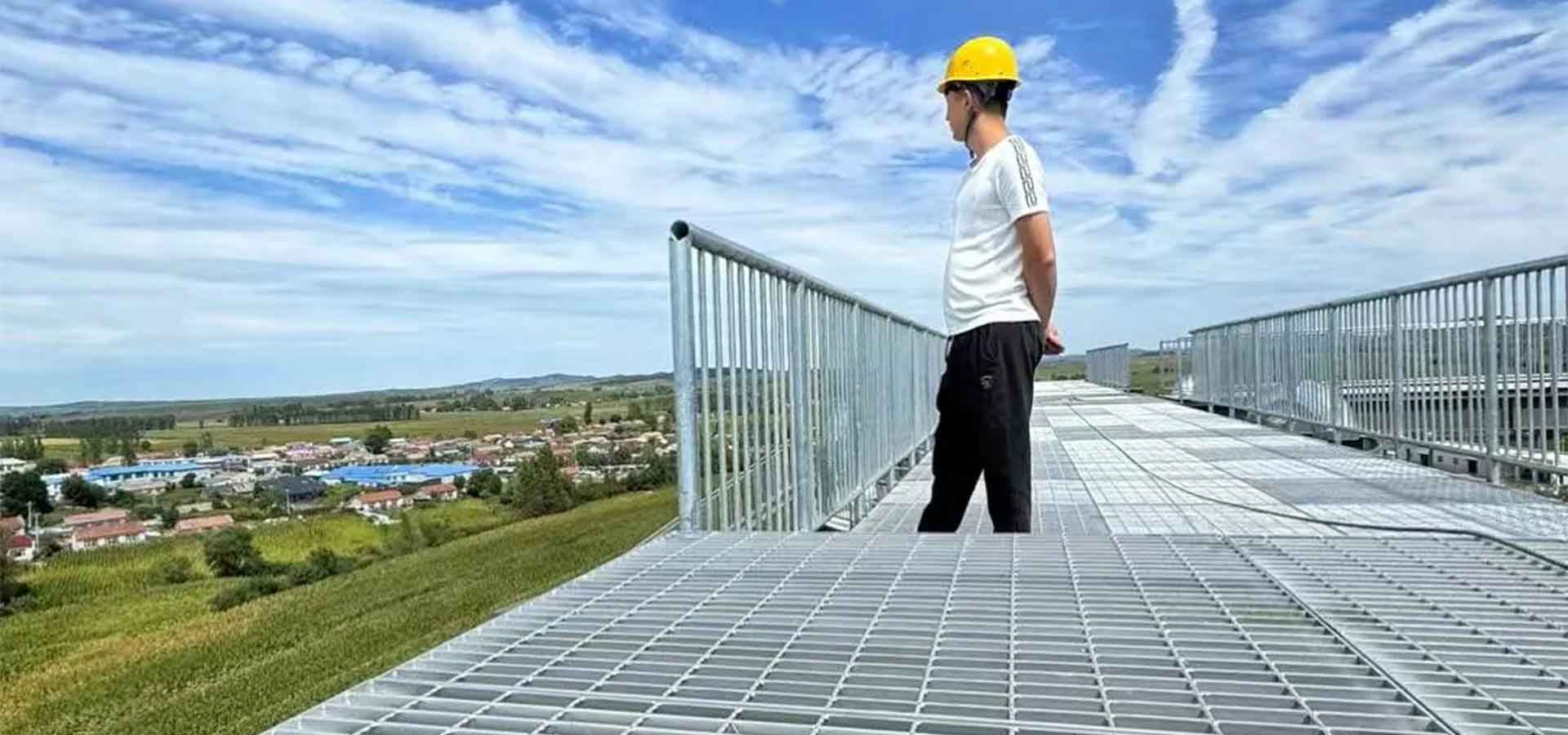
- Solar PV maintenance walkways
- Substation cable trench covers
- Equipment platforms
- Access walkways
For solar power projects, lightweight steel grating can provide a practical walking surface while helping minimize additional structural loads. Anti-slip surfaces can also improve worker safety during maintenance operations.
Oil and Chemical Processing
In oil refineries, chemical plants, and offshore facilities, steel grating is commonly used for:
- Operating platforms
- Equipment access platforms
- Maintenance walkways
- Offshore decks
- Industrial stairs
Hot-dip galvanized steel grating and other corrosion-resistant solutions can help protect against moisture and corrosive substances, providing a durable working surface in demanding industrial environments.
Logistics and Warehousing
Steel grating is also suitable for:
- Heavy-duty storage platforms
- Warehouse mezzanines
- Material handling platforms
- Cargo sorting areas
- Walkways and access platforms
Pressure-locked and other modular grating designs can provide a strong, stable surface while allowing forklifts and other equipment to operate efficiently.
Municipal and Transportation Applications
Municipal Infrastructure
In urban infrastructure projects, steel grating can be found in:
- Stormwater drainage grates
- Sewer trench covers
- Bridge maintenance walkways
- Park walkways
- Pedestrian platforms
Serrated steel grating can provide enhanced slip resistance and is particularly useful in wet environments, pedestrian bridges, platforms, and outdoor walkways.
Specialized grating solutions can also be incorporated into landscape and ecological projects where drainage and permeability are important.
Ports, Parking Areas, and Transportation Facilities
Heavy-duty steel grating can be used in:
- Port cargo yards
- Truck access areas
- Parking structures
- Airport service areas
- Transportation platforms
For applications exposed to heavy vehicle traffic, appropriately designed heavy-duty grating can provide the required load-bearing performance while maintaining good drainage and ventilation.
Architectural and Decorative Applications
Steel grating is no longer limited to purely industrial applications.
With modern design and fabrication technologies, it can also be used for:
- Building facades
- Interior partitions
- Stair treads
- Decorative screens
- Architectural walkways
- Sun-shading structures
Customized patterns and shapes can create a balance between natural light, ventilation, privacy, and industrial aesthetics, making steel grating an increasingly interesting material for contemporary architectural design.
3. Specialized Applications and Custom Solutions
Different industries often require steel grating with very specific performance characteristics.
Marine and Offshore Applications
For ship decks, offshore platforms, and offshore wind facilities, stainless steel grating, aluminum grating, or heavily protected carbon steel grating can be selected according to the environment.
Material and surface treatment should be chosen based on exposure to seawater, humidity, salt spray, and other corrosive conditions.
Food Processing Facilities
Food processing plants and clean production areas require materials that are easy to clean and resistant to contamination.
Stainless steel grating, particularly grades such as 304 or 316, can be suitable for applications where hygiene, corrosion resistance, and easy cleaning are critical.
Security and Protective Applications
Steel grating can also be fabricated into:
- Industrial fences
- Equipment enclosures
- Transformer substation barriers
- Protective screens
- Safety partitions
Modular grating designs allow the density and configuration of protective structures to be customized according to different security requirements.
4. How to Choose the Right Steel Grating
Choosing the correct steel grating requires more than simply selecting a panel size. The most important factors are load capacity, operating environment, dimensions, and applicable standards.
1. Determine the Required Load Capacity
Different applications require different bearing bar specifications.
For example, lighter pedestrian applications may use smaller bearing bars, while industrial walkways, forklift areas, and heavy equipment platforms require stronger configurations.
For heavy-duty applications, larger bearing bars can be specified to provide additional load-bearing capacity.
The final specification should always be determined based on the actual span, load, support conditions, and relevant engineering requirements.
2. Match the Material to the Environment
Material and surface treatment should be selected according to the operating environment.
- General industrial applications: hot-dip galvanized carbon steel
- Highly corrosive or hygienic environments: 304 or 316 stainless steel
- Marine and high-salt environments: stainless steel, aluminum alloy, or enhanced corrosion-protection systems
- Indoor applications: painted or untreated carbon steel may be suitable depending on conditions
Proper material selection can significantly improve the service life and overall cost-effectiveness of the grating.
3. Select the Correct Grating Specifications
Important parameters include:
- Bearing bar size
- Bearing bar spacing
- Cross bar spacing
- Panel dimensions
- Surface treatment
- Load capacity
- Slip-resistance requirements
Common bearing bar spacing options include 30 mm, 40 mm, and 60 mm, while cross bar spacing is often available in 50 mm or 100 mm configurations.
The optimal combination depends on the project’s structural and operational requirements.
4. Check Applicable Standards and Quality Requirements
For engineering projects, buyers should select products manufactured according to applicable standards and specifications.
In China, commonly referenced standards include YB/T 4001.1-2019 and GB/T 700-2006, while international projects may require compliance with standards such as EN, ASTM, or ANSI/NAAMM, depending on the project location and engineering specifications.
Quality certifications, material certificates, welding inspection records, and third-party test reports can also provide additional assurance for major projects.
5. Future Trends in the Steel Grating Industry
As renewable energy, smart manufacturing, and modern infrastructure continue to develop, the steel grating industry is moving toward digital manufacturing, customization, and sustainability.
Smart Manufacturing
Automated welding, CNC cutting, and digital production management are improving manufacturing accuracy and efficiency.
Combined with CAD and parametric design technologies, manufacturers can respond more efficiently to customized requirements and complex project drawings.
Lightweight and Sustainable Solutions
Optimized grating designs can reduce unnecessary steel consumption while maintaining the required structural performance.
The increasing use of recycled steel and environmentally friendly surface treatment technologies is also supporting the industry’s transition toward more sustainable manufacturing.
Specialized Products for Emerging Industries
The rapid development of solar power, wind power, electric vehicles, and other emerging industries is creating new demand for specialized grating products.
Manufacturers are developing customized solutions for applications such as solar maintenance walkways, offshore wind platforms, EV manufacturing facilities, and new energy industrial parks.
Integrated Project Services
Modern steel grating suppliers are increasingly providing more than just finished products.
From material selection and engineering design to manufacturing, surface treatment, quality inspection, packaging, and installation support, integrated services can help customers reduce project coordination costs and improve overall efficiency.
Conclusion
From elevated industrial platforms to urban drainage systems, from power plant maintenance walkways to port cargo yards, steel grating quietly supports countless industrial and infrastructure projects around the world.
It is much more than a simple industrial material. With its combination of strength, durability, open-area performance, corrosion resistance, and customization flexibility, steel grating has become an important structural component for modern infrastructure.
As manufacturing technology continues to evolve and new application scenarios emerge, custom steel grating will play an increasingly important role in industrial, commercial, transportation, energy, and architectural projects.
Choosing the right steel grating is ultimately about finding the right balance between load capacity, material, corrosion resistance, safety, installation requirements, and cost.
For projects with specific dimensions, loads, shapes, or environmental requirements, working with an experienced steel grating manufacturer can help ensure that every panel is designed and manufactured for its intended application.